
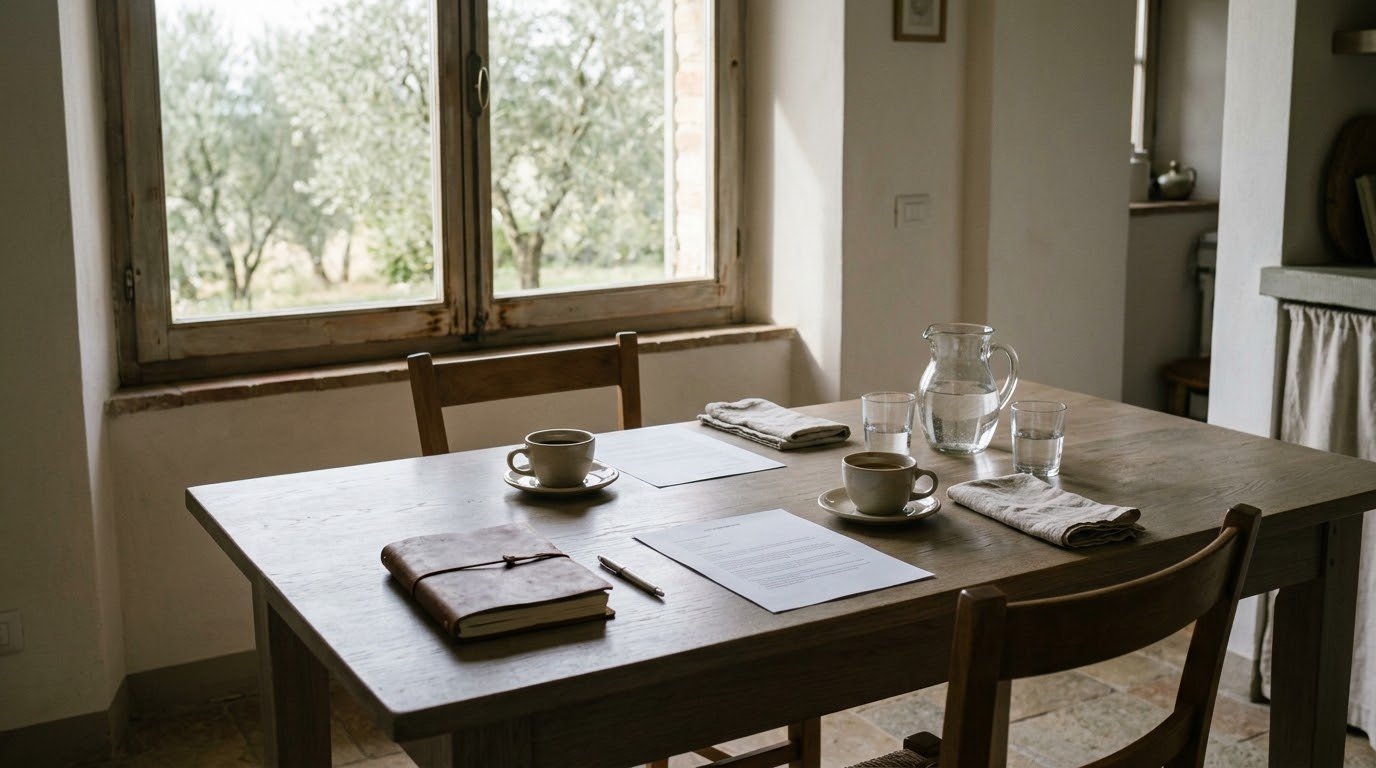
Interviews for private households are odd little rituals. Usually there’s a kitchen table, a pot of coffee, and a member of the family who has never hired anybody in their life, sitting opposite a stranger who may soon have the keys to the house, the children’s names and the code to the gate. Under pressure, people reach for whatever they half-remember from their own job interviews, and out comes “where do you see yourself in five years?”, which tells you precisely nothing about whether this person can run a linen cupboard or will keep quiet about who came to dinner. The household staff interview questions that earn their place are about the work, about this particular house, and about those small, telling moments where a really good housekeeper or house manager does something an average one wouldn’t think of.
Before anyone sits down
Write the job down. A single page will do, and please don’t make it sound like an advert. Put down what they’ll really be doing on an ordinary Tuesday. Hours, days off, whether they live in. Languages. Driving. Then the two or three things you won’t budge on, ever. Then write down what you’re offering, because good candidates ask, and “we’ll see” goes down about as well as you’d expect. Stuck on the money? The floors and the going rates are in our piece on household staff salaries in Italy and Switzerland. Not sure whether you need a housekeeper, a butler or a house manager? What a house manager does sorts out who’s who.
We’d also pick the questions beforehand and put the same ones to everybody, more or less in the same order. Yes, it feels a bit stiff for a kitchen table. But a week later, when three conversations have melted into one in your memory, it’s the only fair way to compare people, and it has the happy side effect of keeping you away from the questions you mustn’t ask.
Questions about the work
Our favourite opener is to ask someone to tell us about the last house they worked in, properly: how big it was, how many in the family, who else was on the team and which bits were theirs to look after. It beats any CV. Within a couple of minutes you can usually hear whether they ran that house or simply passed through it. After that, get them to walk you through something real, slowly, as though you’d never seen it done. Getting a guest room ready for somebody landing at nine tonight, say. Or what happens to the silver after a dinner for twelve, or how they’d shape a week where the family turns up on Thursday and guests follow on Saturday.
The detail is what you’re listening for. People who’ve really done the job can’t help themselves; out tumble the water carafe by the bed, the drawer liners, the list taped inside the pantry door. People who haven’t stay vague and pleasant.
With senior people we go looking for judgement. A supplier who let them down the day before something that mattered, and what they did about it. A new colleague who wasn’t up to scratch. The first thing they’d change in a house that has run the same way for twenty years. None of these has a right answer, which is rather the point. You want somebody who stays calm, owns up to what went wrong and doesn’t spend ten minutes blaming the florist.
Questions about discretion
Discretion is maddeningly hard to interview for, and the best evidence tends to turn up without being asked for. Listen to how a candidate speaks about former employers. The one who regales you, happily and in vivid detail, with stories about the famous family they’ve just left will one day regale somebody else with stories about yours. A good candidate talks about the work and leaves the people out, and squirms slightly if you press.
It’s still worth asking straight out. What would they say if a neighbour, or a journalist, asked who they worked for? What do they post online, and would a photo from inside a client’s house ever make it onto their phone’s camera roll, let alone the internet? Have they signed confidentiality agreements before, and how did they feel about it? Nobody’s after a polished speech here. You’re hoping for somebody to whom the answers seem faintly obvious.
Questions you shouldn’t ask
Here’s where perfectly nice families stumble. Acas, the British body that advises on employment, is blunt about health and disability: keep them out of the interview, bar a few narrow cases (whether somebody needs an adjustment just to attend, say), and leave the subject alone until there’s an offer on the table. Then there’s the list of characteristics British law protects, which runs to age, disability, gender reassignment, marriage and civil partnership, pregnancy and maternity, race, religion or belief, sex, and sexual orientation. Worth pinning to the fridge before the first candidate rings the bell.
Italian law gets there too, by a slightly different road. Its equal opportunities code bans discrimination over access to work whatever the sector, and goes out of its way to say that this includes doing it by reference to someone’s marital status, family situation or pregnancy. Which rules out the wedding, the kids, the dreaded “any plans for a family?”, and anything to do with church or politics. When the job really does ask something of people, put that to them instead. Two weekends a month and a fortnight up at the mountain house every February: can they manage it? Put it to everyone and you’ll get the answer you were after, minus the awkwardness.
References, properly
References in our line of work are mostly lovely, brief letters that tell you next to nothing. Pick up the phone. Speak to the employer or the house manager in person, and where you can, look the number up yourself instead of dialling the one printed under the signature (a small precaution, and it costs nothing). Then keep it plain: dates, role, what the person was brilliant at, what they struggled with, why they left. And the question that matters most, whether they’d take them on again. Listen to the pause before the answer; it’s often the most honest part of the call. In the UK you’ll need to check the right to work before anyone starts, Italy and Switzerland have their own paperwork, and that alone is a good enough reason to keep a written checklist for every hire.
The trial day and the trial period
Watching someone actually work trumps everything else. Give them a paid day in the house and something real to get on with, a guest room to turn round or a lunch table to lay or a morning trailing the house manager, and by teatime you’ll know more than three interviews could have told you. Do pay them. Plan the day too, so nobody’s left wandering the corridors wondering what to do, and afterwards ask the people who worked beside them what they thought.
The trial period comes after the hire, and it’s a different animal, with rules. Italy’s national agreement for domestic work sets it at eight days of actual work for most live-out roles and thirty for live-in staff and the senior levels, paid, and only valid if it’s agreed in writing. In Switzerland, the Code of Obligations treats the first month as the probation period unless something else is agreed in writing, with seven days’ notice either way, and it can’t run past three months. Used well, it’s a proper look at each other, House Book and routines and all, before anybody commits.
The Household Employer’s Kit takes you through the whole process for Italy and Switzerland, and among its eighteen templates are interview questions for each post, an interview scorecard, a reference check form, a trial day plan and an onboarding checklist. If you’re sitting on the other side of the table, Working in Private Households covers interviews and trial days from the candidate’s chair. Once somebody new has started, the house manual is what gets them through the first fortnight. And for anything else, write to us.
Questions
What questions should I ask a housekeeper in an interview?
Concrete ones about the work: the last house they looked after and what was theirs to run, how they would prepare a guest room for an arrival tonight, how they care for silver after a dinner, how they would organise a week with guests. Add questions on judgement and discretion, and ask every candidate the same ones.
What questions can't I ask household staff at interview?
Avoid questions about health or disability before a job offer, and about marriage, children, pregnancy, religion, politics or other protected characteristics. Ask instead whether the candidate can meet the requirements of the role, such as weekend work or travel.
How long is the trial period for domestic staff in Italy?
Under the national collective agreement for domestic work, it is 30 days of actual work for live-in staff and for levels D and D super, and 8 days of actual work for other roles. It is paid and only valid if agreed in writing.
How does probation work for household staff in Switzerland?
Under the Code of Obligations, the first month of employment is the probation period unless agreed otherwise in writing, with seven days' notice on either side, and it cannot be extended beyond three months.
We write the Journal from our own work in private houses in Italy and Switzerland. Every house has its own rules: take what fits yours, and ask us about the rest.
Sources
- Acas, Following discrimination law: recruitment
- GOV.UK, Employing someone to work in your home
- Codice delle pari opportunità (Legislative Decree 198/2006), Article 27
- Assindatcolf, CCNL lavoro domestico 2025–2028, full text (art. 12, the trial period)
- Swiss Code of Obligations (SR 220), Article 335b, probation period