A well-run house looks effortless because the effort is written down: who does what, when the house opens and closes, what "ready" means, and whom to call when the boiler stops. These articles cover that side of the work, from a house manager's day to closing a summer house for the winter.
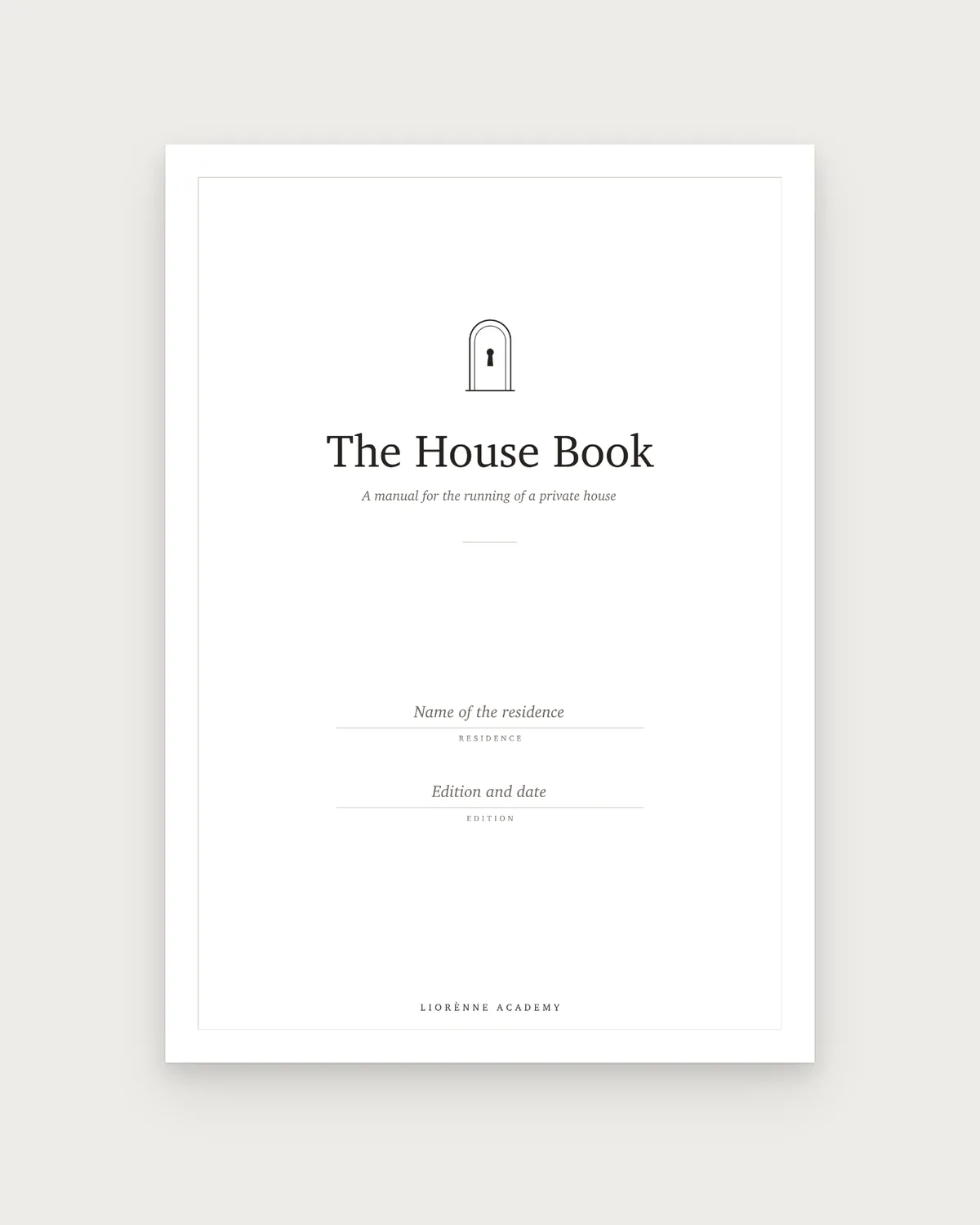
They all come back to one document, the House Book: a manual written for each house, so that when people change, the house remembers.
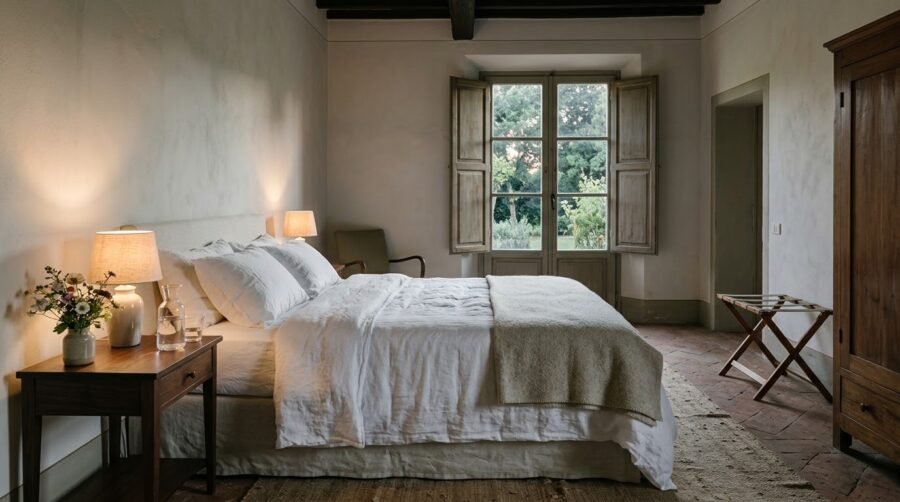
The questions to ask before a guest arrives, why the bed comes first, temperature, darkness and quiet, the practical things nobody packs (plugs and Wi-Fi included), the bathroom, the small welcome and the last walk through the room.
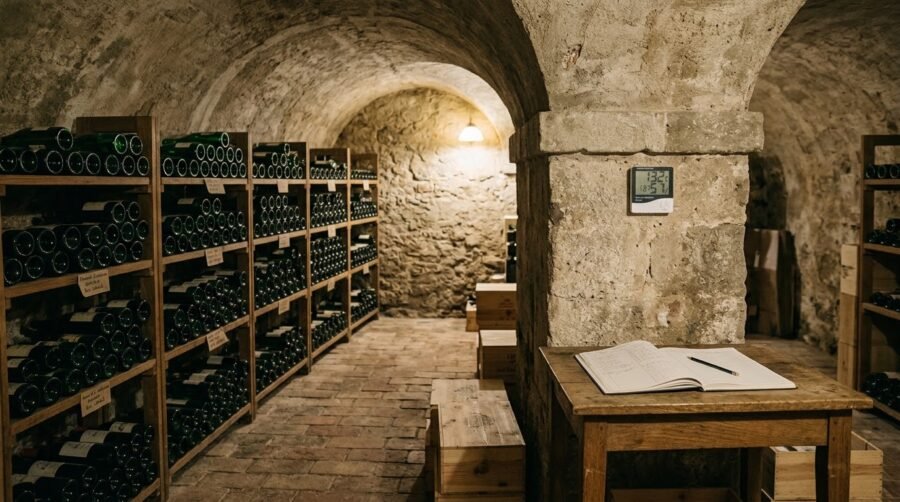
Why a steady temperature matters more than the perfect one, how much humidity a cork needs, light, vibration and smells, what to do without a real cellar, how to check the room and why every cellar needs a book.
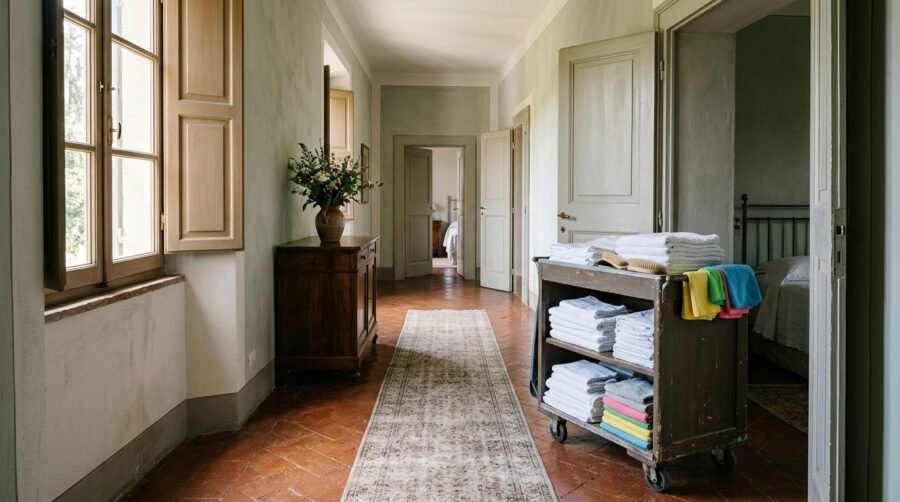
Why a big house needs a rotation as well as a rota, the daily reset, the weekly round with a few rooms in turn, the monthly places that hide, the seasonal and yearly jobs, and the whole schedule on one page.
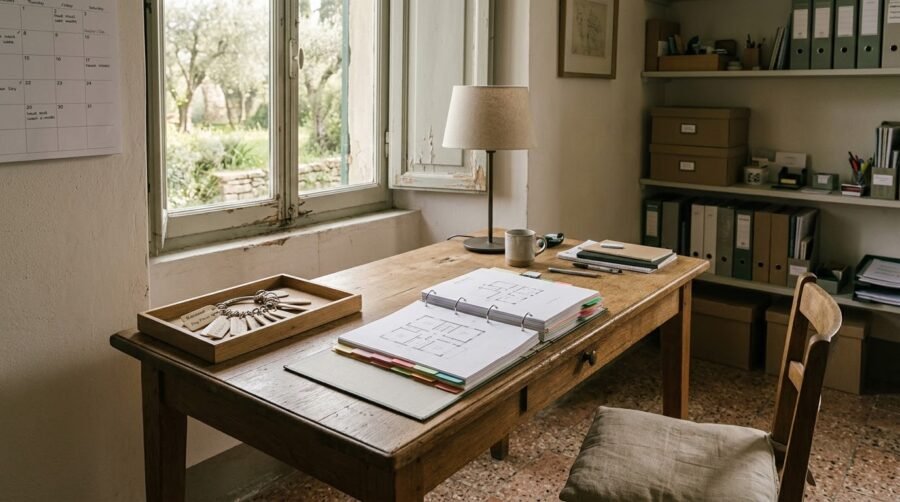
What a house manual is and isn't, what goes in it room by room, what must never be written down, how to write one in weeks rather than a year, and how to keep it true and hand it to someone new.
What to write down before the interview, the questions about the work and about discretion that show you who someone is, the questions you must not ask, how to take up references, and how the trial day and the trial period work in Italy and Switzerland.
The checklist we use to close a summer house in October: the weeks before, room by room, linen and silver, the garden and pool, water and heating, security, and what to leave for spring.
A July day in a private house, hour by hour, then the difference between a house manager, butler, estate manager and housekeeper, the mistakes families make when hiring, and how to brief one.
Put it into practice
The Academy guide that goes with these articles, and the service that does the work for you.