
Most dinners at home go wrong at about seven in the evening, and nearly always for a reason that was decided three weeks earlier. Somebody invited one person too many for the table. Nobody asked about allergies until the soup was already on its way. Or the menu called for three things finished at the last minute in a kitchen where two people can’t pass each other. So most of knowing how to plan a dinner party comes down to deciding things early, while it’s still easy, until by the evening there’s nothing left to decide. Here’s the timeline we use in the houses we keep, from the first phone call to the morning after.
Three weeks before: the guests
Start with the number. It quietly decides almost everything else. Eight people at a table is one conversation. Twelve is two or three, which is fine, as long as you’ve planned it that way. Above sixteen you’re running a small banquet and the kitchen will need help it doesn’t currently have. Count the chairs that actually match before you count the friends.
Invitations go out three weeks ahead for most dinners, nearer six for a big one or anything in August, when half of Milan is on a boat. For a dinner at home a phone call or a message is perfectly proper (save the printed cards for the occasions that deserve them), and whichever you use, ask about food in the same breath. “Is there anything you don’t eat?” asked three weeks before is good manners. Asked at the door, it’s a crisis.
Write the answers down on a separate sheet, kept apart from the guest list and seen only by the people cooking and serving. Allergies and medical diets are nobody else’s business, and they’ve no place on a list that ends up abandoned on the hall table. Our checklist is the fourteen allergens in European food law (gluten, crustaceans, eggs, fish, peanuts, soy, milk, tree nuts, celery, mustard, sesame, sulphites, lupin and molluscs), so that a question like “any nuts?” never gets answered with “I think he said walnuts were fine”.
Ten days out: menu and wine
We plan a menu backwards, starting from the kitchen as it’ll be on the night rather than from the cookbook. Count the hobs, the pairs of hands and the minutes you’ll have between courses. The answer is usually that one course should be cold or finished ahead, one can wait happily in a low oven, and only one should need the cook’s full attention at the moment of service. A menu with three dishes that must all be finished à la minute is a menu that will be served late.
Never try a dish for the first time on the night. If the chef wants to, the family gets it for lunch the week before, which is a perk nobody has ever complained about.
Then the wine. We reckon on about half a bottle a head over the evening, a bit more in summer, plus a few spare bottles, since good dinners always run long. Go down to the cellar ten days before, not two, and look at the actual bottles rather than trusting the inventory. Any old red gets stood up the day before so its sediment has time to drop. If the cellar itself worries you, here is how we keep a home cellar.
The week of the dinner: seating, staff and silver
Do the seating plan two or three days ahead, in pencil. Couples usually sit apart, which is half the point of going out to dinner. The guest of honour sits to the right of the host or hostess. When there’s an official guest, precedence stops being a matter of taste, so read receiving a VIP guest at home before you start moving names about. Then write the place cards by hand.
The silver comes out two days before, never on the day. Anything that needs cleaning gets done then, with our method for cleaning silver, and goes back into its cloths until the table is laid.
The staff get their briefing the day before, everyone at once, with it written down. Who’s on the door and who takes the coats, who pours and who clears, and which car goes where when it’s all over. Five minutes standing in the kitchen saves an evening of looks across the dining room. If guests are staying over, their rooms get made up the same day, to the standard in how we prepare a guest room.
The day itself
10:00 Flowers and the last shopping
Flowers in the morning so they have time to open, fish and bread as late as the shops allow. The flowers for the table stay low, and nothing strongly scented goes anywhere near the dining room.
15:00 The table
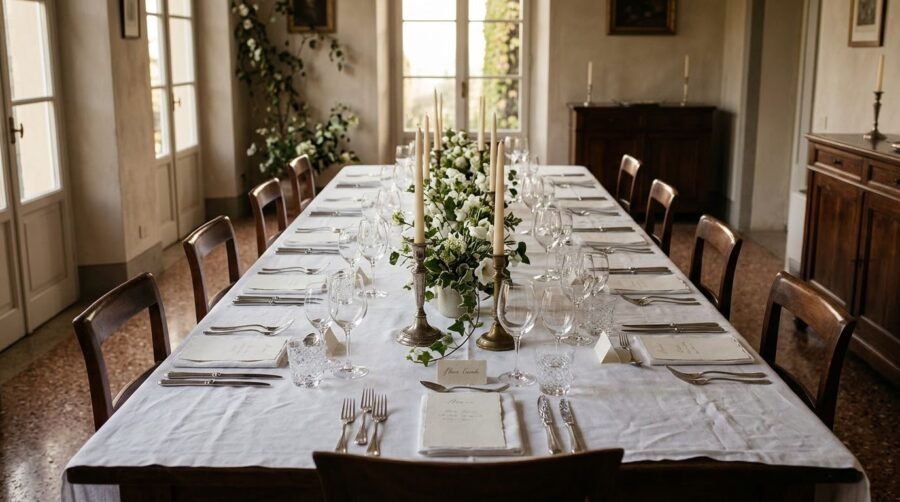
The table is laid in the afternoon, slowly, with a stick to measure the places and gloves for the silver. We wrote the whole procedure up, piece by piece, in how to set a formal table.
17:30 The run sheet
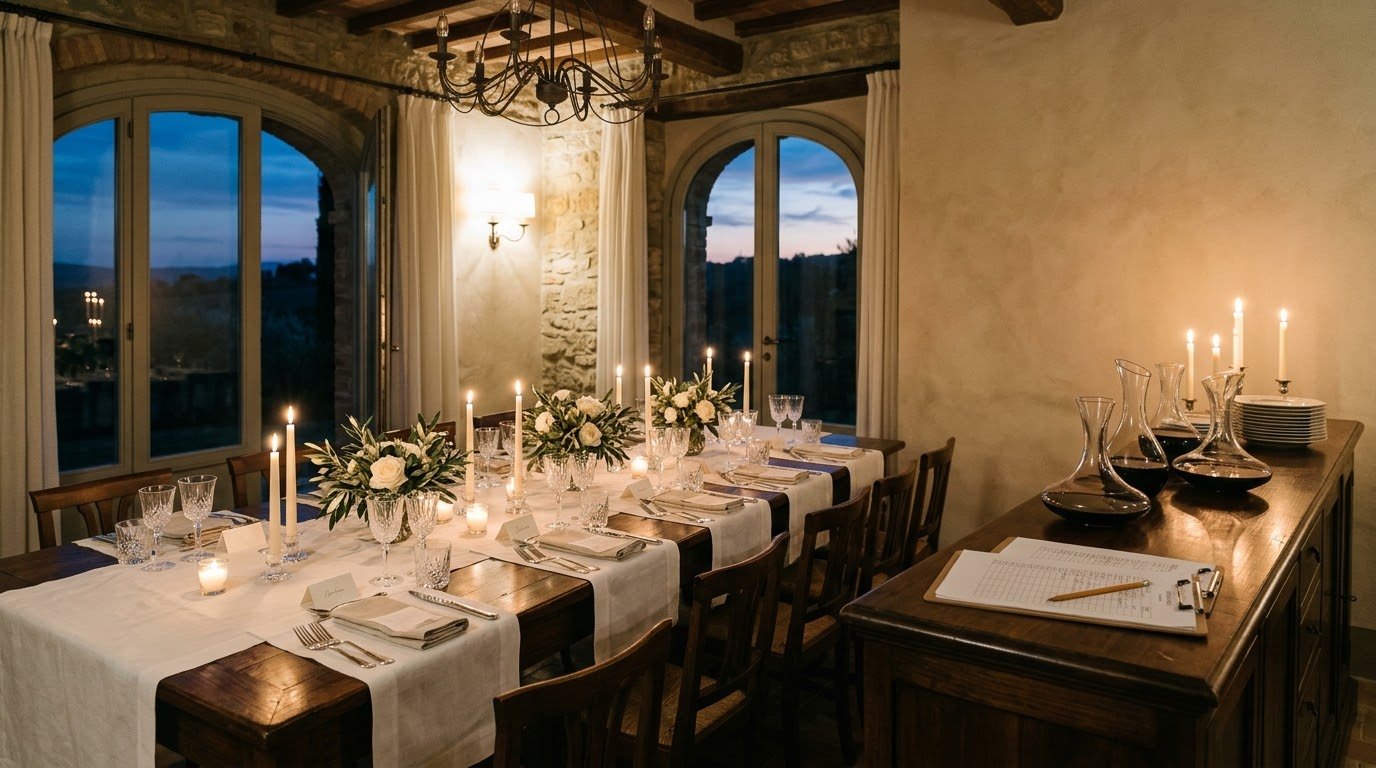
The kitchen and the dining room work from one page: the time each course leaves the kitchen, who serves it, which wine goes with it, the signal for clearing. On the back, the dietary sheet, so that the plate for the guest who can’t have shellfish is the one that goes to the guest who can’t have shellfish. It sounds obvious. It’s the mistake that gets made when everyone’s in a hurry and two plates look the same.
19:30 Drinks
Guests are asked for half past seven and sat down around a quarter past eight. Forty-five minutes is long enough for the late ones to arrive and short enough that nobody’s on their third glass of champagne before the soup. Something small to eat with the drinks, and no more; a guest who has filled up on canapés is a guest who sends back the main course.
20:15 Dinner
Formal service still follows the old rule: food offered from the guest’s left, plates cleared from the right, wine poured from the right. Nothing gets cleared until the last person has put down their fork, and nothing new arrives until the table’s empty again. The pace belongs to the slowest eater at the table, never to the kitchen. A good butler watches the host as well: one look, and the next course goes, or doesn’t.
22:30 Coffee somewhere else
Moving the guests to another room for coffee does two useful things. It lets people change who they’re talking to, and it lets the staff clear the dining room without an audience. Cars are called when guests ask for them, not before. Nobody should ever feel that the house wants them gone.
The morning after
A well-run house writes the dinner down while everybody still remembers it. What was served, to whom, with which wine. Which guest didn’t touch the lamb, who asked for the recipe, what the kitchen would do differently. It takes ten minutes, and next year it stops the house serving the same sea bass to the same guest for the third time. Hired glasses go back, the silver goes back into its cloths, and the staff hear what went well, which matters more than it sounds.
Thank-you notes are the guests’ business. A short note from the host to anyone who went out of their way, though, is never wasted.
The mistakes we see most often
One guest too many for the table. Allergies discovered at the door. A menu that only works if the cook can be in three places at once. Drinks that run for an hour and a half while the kitchen watches the fish dry out. The guest of honour put next to the one person they’d rather not see. And the most common of all, the host who ends up in the kitchen all evening, which is exactly what all this planning is supposed to prevent.
We turned this timeline into The Dinner Party Planner, a printable planner for dinners of eight to twenty, with the guest list, the restricted dietary sheet, the run sheet, seating plans and a record of what each guest was served. If you’d rather hand the whole evening over, dinners at home are part of our household management. Either way, tell us about the house.
Questions
How far in advance should you send dinner party invitations?
About three weeks for most dinners at home, closer to six weeks for a large dinner or in high summer. A call or a message is proper for an informal dinner; printed cards suit the occasions that deserve them.
How much wine do you need for a dinner party?
Plan on roughly half a bottle per guest over the evening, a little more in summer, and keep a few bottles in reserve. Check the cellar ten days before rather than two.
Where does the guest of honour sit?
To the right of the host or hostess. Couples usually sit apart. With an official guest, precedence follows formal rules rather than taste.
Which side do you serve and clear from?
In formal service, food is served from the guest's left and plates are cleared from the right; wine is poured from the right.
We write the Journal from our own work in private houses in Italy and Switzerland. Every house has its own rules: take what fits yours, and ask us about the rest.